
Strolling through the old town of Torres Vedras
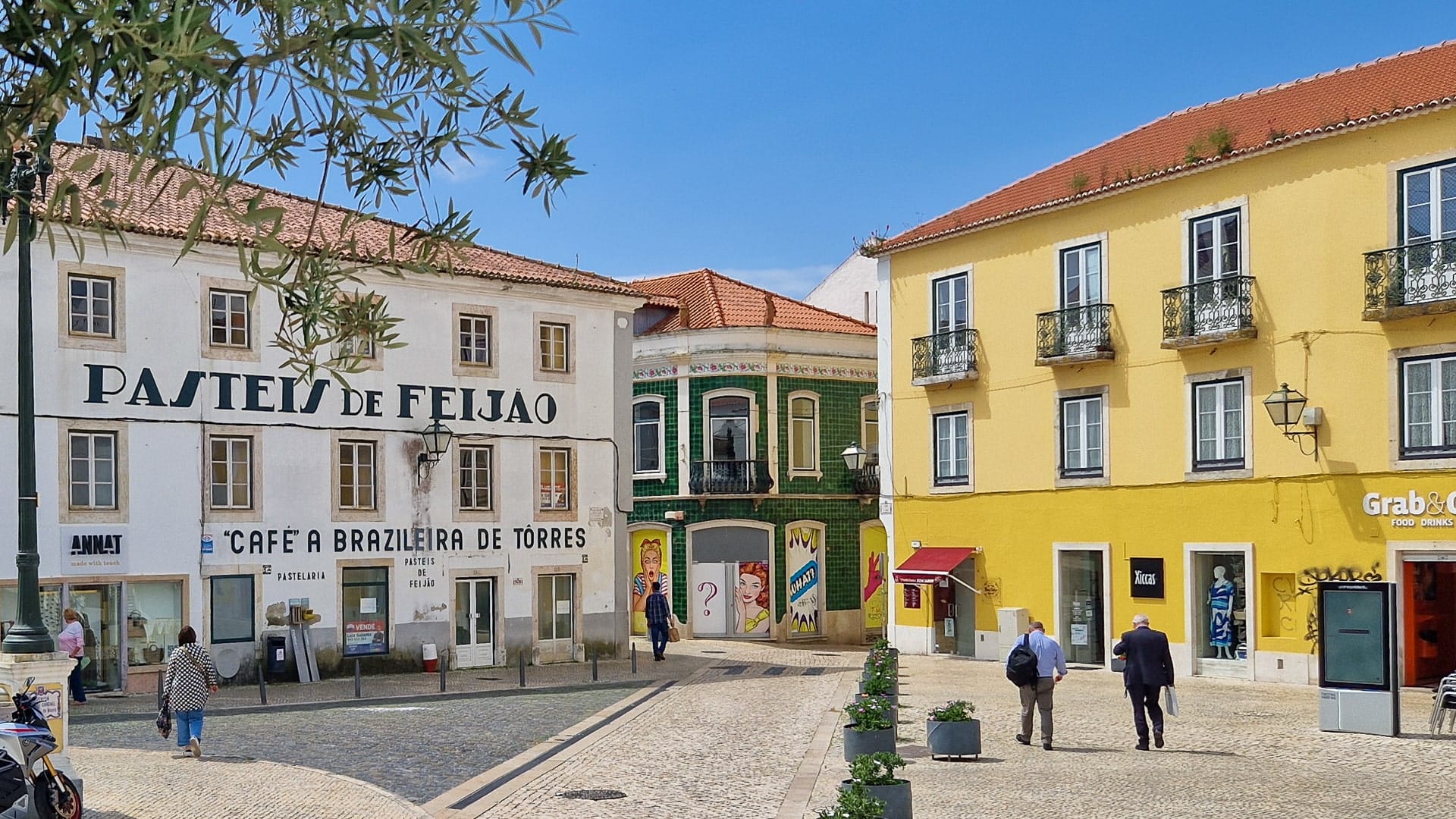
The city of Torres Vedras has a beautiful and compact historic centre where you can enjoy a day of strolling. Like so many Portuguese cities, it has a castle, sumptuous churches, romantic small streets and cozy squares, but there are not many tourists around. You have plenty of space to discover, meet, photograph and taste. Highly recommended for those who want to avoid the crowd.

Linhas de Torres Vedras
Torres Vedras is located in the district of Lisbon, more than 50 kilometres north of the Portuguese capital. People lived here long before the Christian era, but the region is mainly known historically because of the war with Napoleon (1807-1814). More than 85 kilometres of defensive lines with 152 military buildings were intended to keep the Frenchman at a distance from Lisbon. These “Linhas de Torres Vedras” caused the French troops to retreat in 1810, the beginning of the end for Napoleon.

Castelo de Torres Vedras
A visit to the castle takes you to the highest point of the historic centre. What you see here is definitely not the original version. The height of the hill attracted residents as early as 3000 BC. The Romans strengthened the fortifications and the Moors also contributed to it. The latter were eventually expelled by the first king of Portugal, Afonso Henriques (1148).
Over the centuries, all kinds of enemies had to be kept at a distance here. For example, at the beginning of the nineteenth century, when Napoleon tried to conquer the Iberian Peninsula. In the Centro de Interpretação of the castle, more information is given about the history and you can see some archaeological finds (text only in Portuguese).


Igreja de Santa Maria do Castelo
Within the castle walls, you’ll find the elegant Igreja de Santa Maria do Castelo, a church dating back to the twelfth century. The two portals are the only example of Romanesque architecture in Torres Vedras and both are national monuments. Another special feature is that the church has two bell towers.


Centro de Interpretação de Comunidade Judaica
Just outside the castle walls you will find a visitor centre about the Jewish community that lived in Torres Vedras from the thirteenth to the sixteenth century. There aren’t many physical remains, but there’s a lot to read inside. Particularly interesting are the personal stories of Jewish residents about love, work and their complex relationship with the Christian inhabitants of the city.

Casa de Ceuta
Right next door to the Jewish visitor center is the Casa de Ceuta. In the 13th century, it was home to the Paço Régio, a residence for the royal family. It was commissioned by Queen Beatriz, who loved to spend time in Torres Vedras. In 1414, it was decided right here to undertake an expedition to Ceuta, an important step in Portugal’s maritime expansion. The current house no longer has any remains of the former Paço Régio.
Paços do Concelho | Galeria Municipal
This beautiful building on the Praça do Município square dates back to at least 1337. In 1744 it suffered major damage when a prisoner set fire to the building. Most of the medieval archives of the municipality went up in flames. Between 1752 and 1776 it was restored, adding the beautiful fountain in the Portuguese Pombaline style. Inside you will find a free gallery where all sorts of exhibitions are on display. It’s great to cool off here on a hot day and at the same time get acquainted with interesting art.

Chafariz dos Canos
Next to a former medieval gate is this imposing Gothic fountain, which was already mentioned in sources from 1322. It provided water for the inhabitants of Torres Vedras and their animals. It has been restored and adapted many times over the centuries. In 1910 it became an official national monument.

Igreja de São Pedro
Near the fountain you find the church in honour of St. Peter, whose bronze statue shines in the square in front of the church. It is, after the church within the castle walls, the second mother church of the city. You enter through a portal in Manueline style, richly decorated with plants and animals. The inside is impressive with shiny gold, a variety of tile panels and an eighteenth-century organ.

Igreja de Santiago
In the heart of the historic centre you will come across the Igreja de Santiago. The Manueline-style portal and the bell tower are the highlights on the outside. Inside, the emptiness is particularly striking, because the pews are missing. This church no longer hosts mass, but special events, such as classical concerts and a book market.


Obelisk
The obelisk is the very latest landmark in the list, as it was only placed in 1954. It commemorates the victims of the war with Napoleon, the Guerra Peninsular (1807-1814). The dates of different battles are engraved in the column. It is surrounded by trees, so it is a nice place to catch a bit of shade.

Pastel de Feijão
Like every Portuguese city, Torres Vedras has a traditional delicacy. It’s the pastel de feijão, a creamy cake of almond, white beans, sugar and egg yolk. Every year, local bakers compete for the title of tastiest pastel de feijão. The election takes place during the Festas de Torres Vedras in the autumn. Taste the cakes, for example, at the Fábrica Coroa or Casa Benjamim.

Other food and drink tips
- Restaurante A Colmeia: for a traditional Portuguese lunch or dinner on a pleasant terrace next to the Igreja de São Pedro
- Pizzeria San Pietro: delicious pizzas in a fantastic location on the Largo de São Pedro
- Taskinha do Chef: small, cozy restaurant with traditional Portuguese cuisine for lunch or dinner
- Pastelaria Casa Torta: beautiful, new pastelaria with its own signature pastry: the amália. Cozy terrace outside in front of the door, or on the square in front of the Paços do Concelho

Practical
- Start your walk at the Posto de Turismo (Praça da República), where you can get a handy map of the centre, with a brief description of the sights.
- There are several parking spaces near the historic centre. For some you have to pay a small amount per hour, a little further down the road you pay nothing.
- Torres Vedras has a train station, but only the regional Linha do Oeste runs here. If you are coming from Lisbon, you will have to change trains.
- Don’t plan your visit on a Monday, as most of the sights are closed.
- Torres Vedras has one of the largest carnival celebrations in Portugal. It is called the city with the most Portuguese carnival in the country, as it strongly adheres to the Portuguese traditions. During carnival there are of course a lot more people in the city.

More Lisbon Region

Ericeira: surf beaches, seafood and much more
When the sun is out, make your way to picture-perfect Ericeira. The best place for surfing, eating seafood and incredible sea views.

From Lisbon to Sintra by train
Want to go to Sintra during your Lisbon holiday? Travel easy and cheap by train.

Best places in Portugal for book lovers
Travel from Lisbon to Porto and discover the best libraries, bookshops and book festivals along the way